

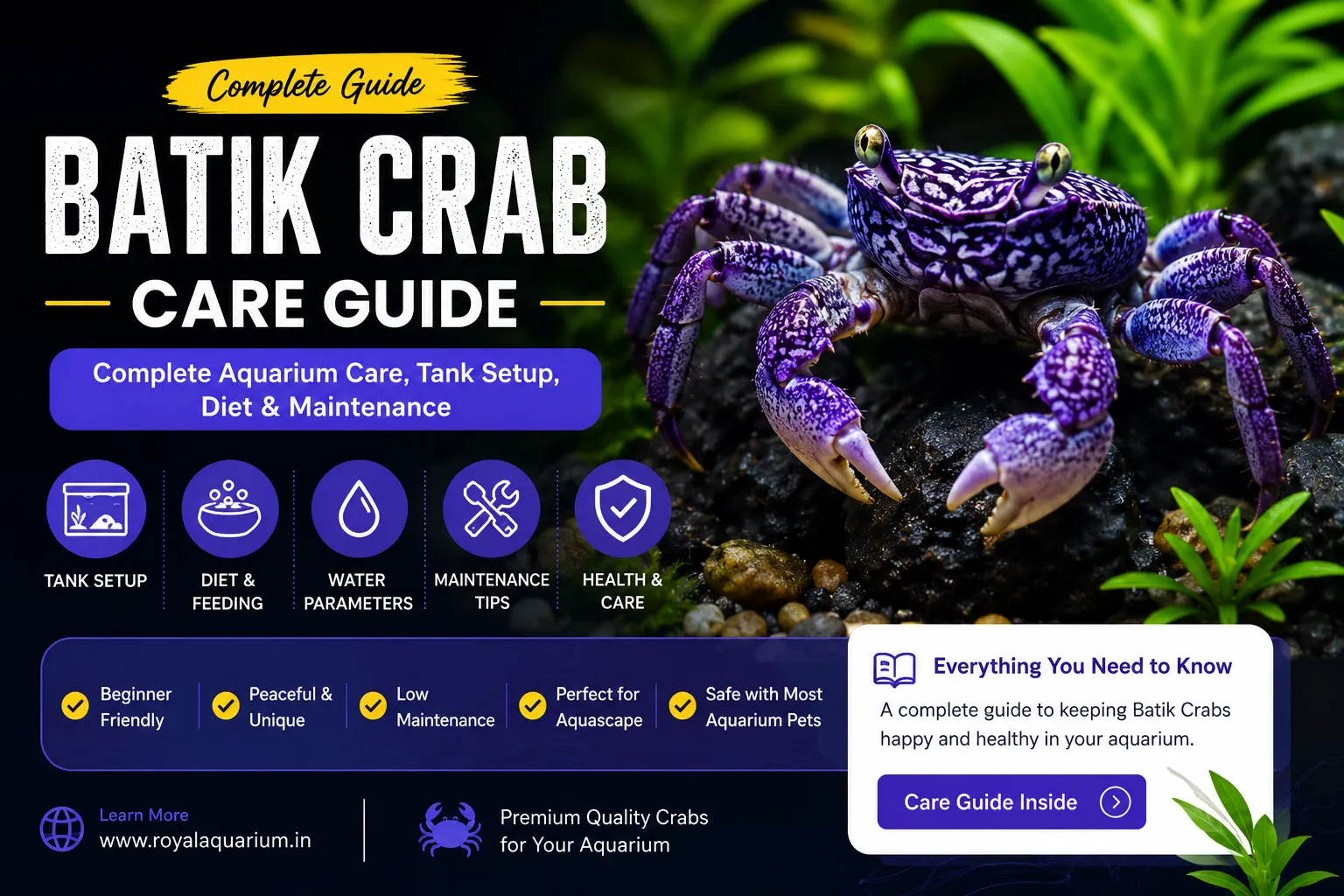
Batik Crab Care Guide for Beginners
Batik Crabs are fascinating freshwater aquarium crabs admired for their unique shell patterns, active personalities, and interesting behavior. Their distinctive markings resemble traditional batik artwork, making them a beautiful addition to planted aquariums and paludariums. While Batik Crabs are relatively easy to keep, they require the correct habitat, water conditions, hiding places, and balanced nutrition to stay healthy.
This complete Batik Crab care guide covers everything beginners need to know, including aquarium setup, water parameters, feeding, compatibility, molting, breeding, and common health issues.
Batik Crab Overview
| Feature | Details |
|---|---|
| Common Name | Batik Crab |
| Scientific Name | Varies by species |
| Family | Freshwater Crab |
| Care Level | Easy to Moderate |
| Temperament | Semi-aggressive |
| Lifespan | 2–5 Years |
| Adult Size | 2–4 Inches |
| Tank Size | Minimum 10–20 Gallons |
| Water Type | Freshwater |
| Temperature | 22–28°C (72–82°F) |
| pH | 6.8–7.8 |
| Diet | Omnivore |
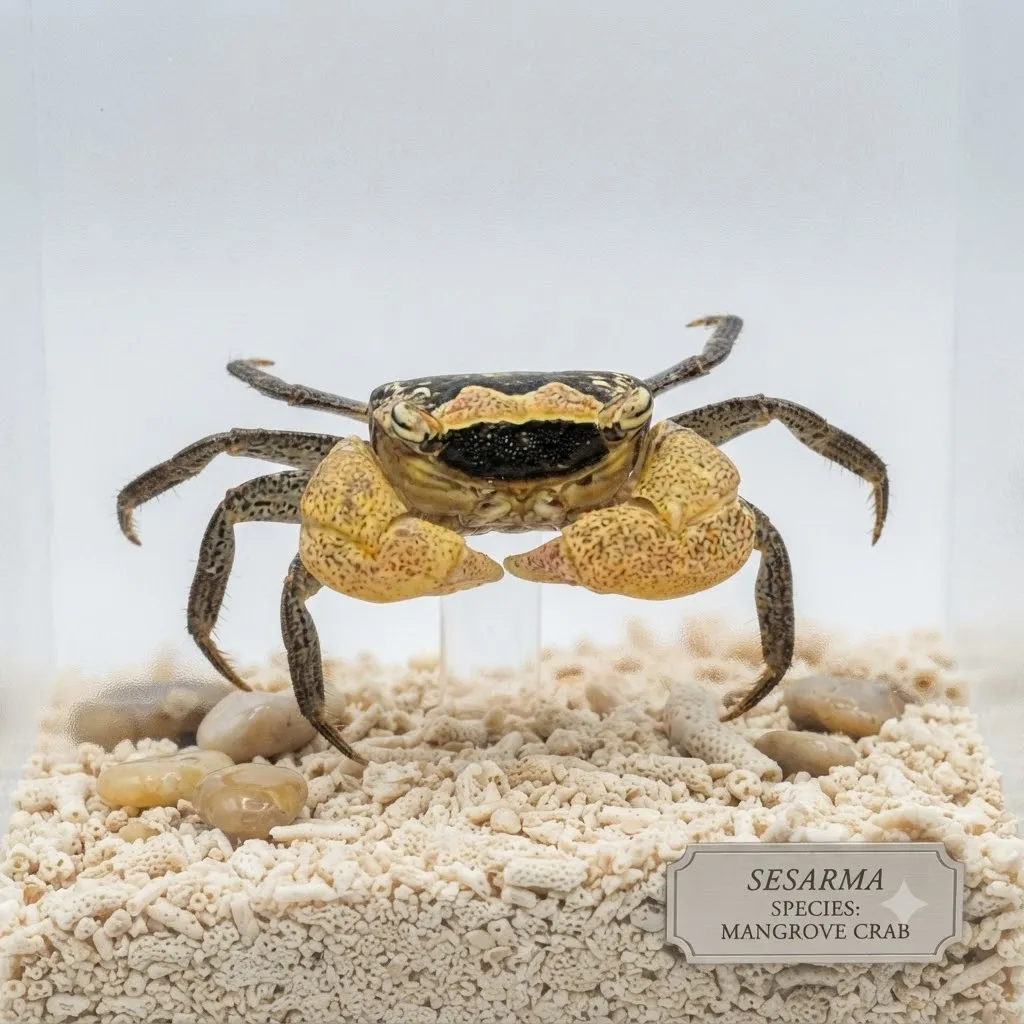
Batik Crab Natural Habitat
Batik Crabs are commonly found in tropical freshwater streams, rivers, and wetlands with plenty of rocks, driftwood, leaf litter, and aquatic vegetation. These habitats provide shelter, food, and safe places for molting.
Creating a natural environment inside your aquarium helps reduce stress and encourages natural behaviors.
Batik Crab Aquarium Setup
A properly designed aquarium is essential for healthy Batik Crabs.
Recommended Tank Size
- Single Crab: 10–15 Gallons
- Pair: 20 Gallons
- Community Setup: 30+ Gallons
Larger aquariums provide more territory and reduce aggression.
Aquarium Substrate
Soft substrates are ideal.
Recommended options include:
- Fine Sand
- Aquarium Soil
- Smooth Gravel
Avoid sharp gravel that can damage the crab’s legs and underside.
Decorations
Batik Crabs love exploring.
Include:
- Driftwood
- Smooth Rocks
- Coconut Caves
- Ceramic Caves
- Leaf Litter
- Aquarium Plants
The more hiding places available, the less territorial they become.
Aquarium Plants
Suitable live plants include:
- Java Fern
- Anubias
- Java Moss
- Amazon Sword
- Water Sprite
- Cryptocoryne
Plants improve water quality while creating a natural habitat.
Water Parameters
Maintaining stable water quality is the key to long-term health.
Ideal conditions:
- Temperature: 22–28°C
- pH: 6.8–7.8
- Hardness: Moderate
- Ammonia: 0 ppm
- Nitrite: 0 ppm
- Nitrate: Below 20 ppm
Perform regular water changes of 20–30% every week.
Filtration
Use a gentle filter that provides biological filtration without creating excessive water flow.
Suitable filters:
- Sponge Filter
- Hang-on-Back Filter
- Canister Filter
Cover filter intakes with sponge guards to protect small crabs.
Lighting
Moderate lighting is sufficient.
8–10 hours of light daily supports healthy plant growth while allowing natural activity.
Batik Crab Diet
Batik Crabs are omnivores and enjoy a varied diet.
Feed:
- Crab Pellets
- Algae Wafers
- Shrimp Pellets
- Bloodworms
- Brine Shrimp
- Earthworms
- Insect Larvae
- Spinach
- Zucchini
- Peas
- Carrots
- Cucumber
Provide calcium-rich foods occasionally to support healthy shell development.
Feeding Schedule
Young Crabs
Feed once daily.
Adult Crabs
Feed every 1–2 days.
Remove uneaten food after several hours to maintain water quality.
Molting
Molting is a normal part of growth.
During molting:
- The crab becomes inactive.
- It hides more often.
- Appetite decreases.
- A soft new shell develops.
Never remove the old shell immediately, as the crab often eats it to recover valuable calcium.
Tank Mates
Suitable tank mates include:
- Nerite Snails
- Mystery Snails
- Amano Shrimp (with caution)
- Fast-moving peaceful fish
Avoid:
- Aggressive Cichlids
- Large Predatory Fish
- Large Crabs
- Crayfish
- Slow-moving fish with long fins
Batik Crab Behavior
Batik Crabs are curious and active, spending much of their time climbing, digging, and searching for food. They establish territories, especially in smaller aquariums, so ample hiding spaces are important.
Breeding Batik Crabs
Breeding can be challenging and depends on the exact species.
Successful breeding generally requires:
- Mature male and female
- Excellent water quality
- Stable temperature
- High-protein diet
- Safe hiding areas
Some species require brackish or marine conditions for larval development.
Common Health Problems
Possible issues include:
- Failed Molting
- Shell Damage
- Stress
- Poor Water Quality
- Fungal Infections
- Parasites
Prevent problems through proper maintenance and a balanced diet.
Aquarium Maintenance
Weekly tasks:
- Test water parameters.
- Perform 20–30% water changes.
- Clean uneaten food.
- Remove debris.
- Inspect the filter.
- Check decorations for safety.
Consistent maintenance promotes long-term health.
Beginner Tips
- Always keep the aquarium covered, as Batik Crabs are skilled escape artists.
- Provide multiple hiding places.
- Avoid overcrowding.
- Maintain stable water conditions.
- Feed a varied diet.
- Offer calcium-rich foods regularly.
- Observe molting without disturbing the crab.
Frequently Asked Questions (FAQ)
Are Batik Crabs good for beginners?
Yes. They are suitable for beginners who maintain good water quality and provide proper shelter.
How big do Batik Crabs grow?
Most species reach between 2 and 4 inches.
Can Batik Crabs live with fish?
Yes, with peaceful, fast-swimming fish. Avoid aggressive or slow-moving species.
How often should I feed a Batik Crab?
Young crabs should be fed daily, while adults generally eat every one to two days.
Do Batik Crabs need land?
Some species benefit from access to land or a paludarium setup, while others remain fully aquatic. Research your specific species for the best care.
Conclusion
Batik Crabs are attractive, intelligent, and rewarding freshwater aquarium pets. With a well-maintained aquarium, stable water conditions, nutritious food, and plenty of hiding places, they can thrive for years. Their unique appearance and engaging behavior make them an excellent choice for aquarium beginners looking to keep something a little different from fish.
Batik Crab Care, Batik Crab Aquarium Care, Batik Crab Care Guide, Batik Crab Tank Setup, Batik Crab Diet, Freshwater Batik Crab, Batik Crab Water Parameters, Batik Crab Aquarium, Batik Crab Feeding Guide, Batik Crab Tank Mates, Batik Crab Molting, Batik Crab Breeding, Batik Crab for Beginners, Freshwater Aquarium Crab Care, Tropical Crab Care, Crab Aquarium Setup, Aquarium Crab Guide, Best Tank for Batik Crab, Batik Crab Maintenance, Batik Crab Habitat.