

Aquarium Thermometer & Fish Tank Temperature Guide
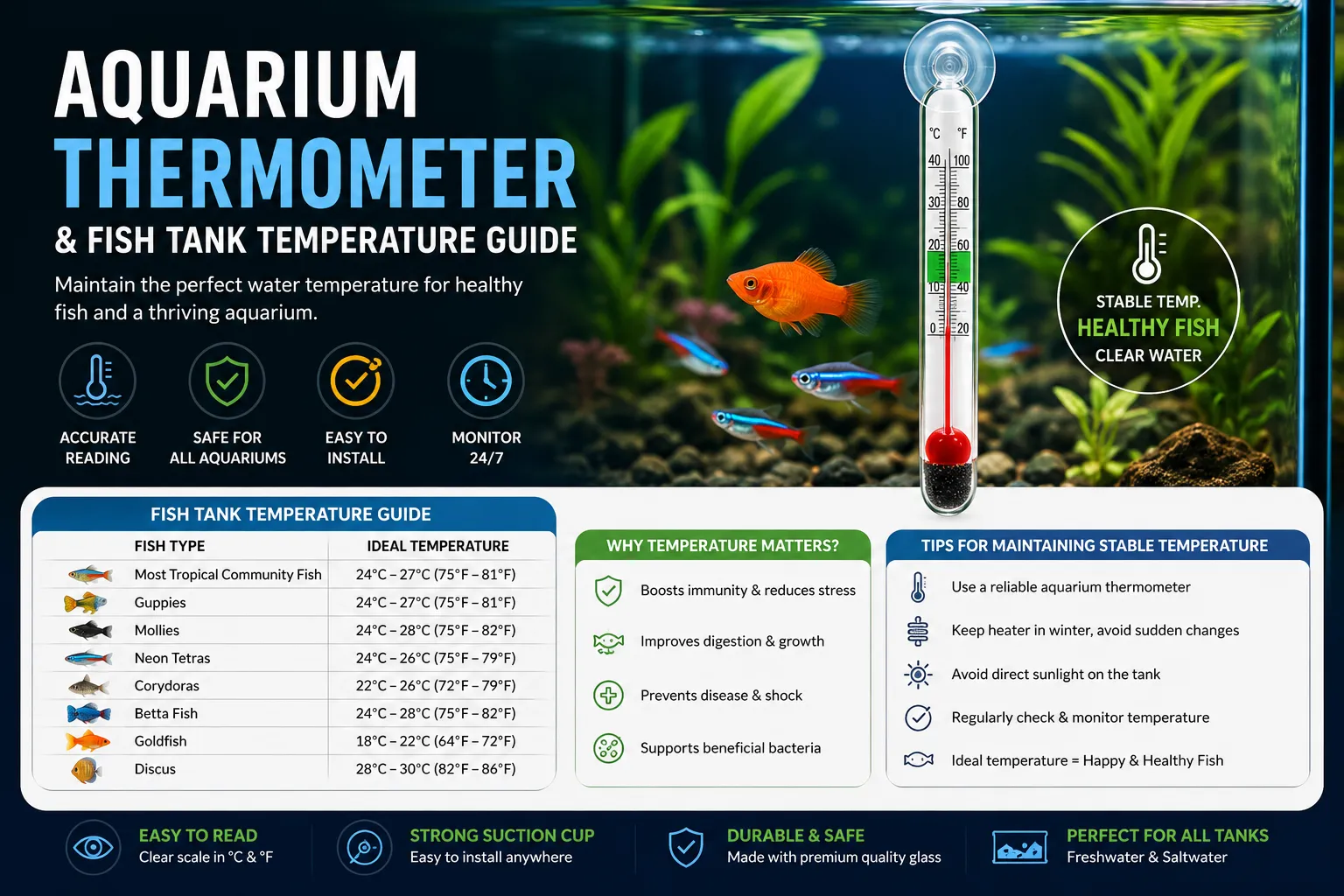
Keep Your Fish Healthy With the Right Water Temperature Water temperature is one of the most important things to monitor in an aquarium. Fish are ectothermic, which means their body temperature and metabolism are strongly affected by the temperature of the water around them. A reliable aquarium thermometer helps you monitor the tank and detect temperature changes before they become a problem. What Temperature Should a Fish Aquarium Be? There is no single temperature that is perfect for every fish. The correct temperature depends on the species. Quick Temperature Guide Fish Type Recommended Temperature Most tropical community fish 24–27°C Guppies 24–27°C Mollies 24–28°C Neon Tetras 24–26°C Corydoras 22–26°C Betta 24–27°C Angelfish 25–28°C Goldfish 18–24°C Discus 28–30°C Neocaridina Shrimp 22–25°C These are general ranges. Always check the requirements of your particular species, especially when keeping multiple species together. What Temperature Should I Set? If you have a normal tropical community aquarium, a good starting target is: 25°C A range of approximately 24–26°C is suitable for many tropical community aquariums, and maintaining a stable temperature is generally more important than constantly chasing one exact number. If you have goldfish, do not use 25°C as a default. Goldfish prefer considerably cooler water. A commonly recommended range is around 18–24°C, depending on the type and conditions. Why Do You Need an Aquarium Thermometer? An aquarium heater controls temperature, but the thermometer tells you what the water temperature actually is. A thermometer can help you: A separate thermometer is recommended even when your aquarium heater has its own temperature display. Types of Aquarium Thermometers 1. Digital Aquarium Thermometer Digital thermometers normally have an easy-to-read LCD display and may use a probe placed in the aquarium. Advantages: 2. Glass Aquarium Thermometer A traditional glass thermometer is placed inside the aquarium and uses a temperature scale. Advantages: Handle glass thermometers carefully because they can break. 3. Stick-On Thermometer These thermometers attach to the outside of the aquarium glass. Advantages: However, an external thermometer can be affected by room temperature, so it may not be as representative as a properly placed water thermometer. Where Should I Put the Thermometer? Place the thermometer somewhere that is easy to see and check regularly. For a heated aquarium, placing the thermometer on the opposite side of the tank from the heater can help you monitor the temperature of the water away from the heater. Avoid placing the thermometer directly against the heater because the reading may not represent the average temperature of the aquarium. Aquarium Heater + Thermometer A heater and thermometer work together: Heater → Controls the temperature Thermometer → Measures the temperature For example, if your tropical aquarium target is 25°C, set the heater according to its manufacturer’s instructions and use the thermometer to verify that the actual aquarium water remains around your desired range. Do not assume that a heater set to 25°C means the entire aquarium is exactly 25°C. Always check the actual water temperature. Is 25°C Good for My Fish? For many common tropical aquarium fish, 25°C is a good general target. For example, many community tropical fish are comfortable around the mid-20s Celsius. However, species such as goldfish and discus have different temperature requirements. Simple Rule Tropical fish → Start around 25°C Goldfish → Keep much cooler Discus and some warm-water species → Usually need warmer water Always identify your fish before choosing the final temperature. Temperature Stability Is Important Avoid making sudden large temperature changes. For example, if your aquarium is at 25°C, do not suddenly add a large amount of very cold or very hot water during maintenance. When performing a water change, try to make the replacement water reasonably close to the aquarium’s existing temperature. Goldfish care guidance also emphasizes avoiding significant temperature fluctuations. What Happens If the Water Is Too Cold? Depending on the species, water that is too cold can cause: Fish have species-specific temperature requirements, so always compare your thermometer reading with the appropriate range for your fish. What Happens If the Water Is Too Hot? Excessively warm water can also be dangerous. Warmer water can increase fish metabolism and oxygen demand. Extremely high temperatures can therefore create significant stress, particularly when oxygen levels are also reduced. If your aquarium becomes too warm: Aquarium Temperature During Water Changes Before adding replacement water, check its temperature. A large temperature difference between the aquarium and replacement water can stress fish. A good practice is to prepare replacement water so that its temperature is reasonably close to the aquarium water before adding it. How Often Should I Check the Thermometer? For a heated aquarium, checking the temperature daily is a good habit. A quick daily check can help you notice: Goldfish-care guidance specifically recommends using an aquarium thermometer to check water temperature daily. Frequently Asked Questions What temperature should I set my tropical fish tank? For many tropical community aquariums, 25°C is a good starting target, with approximately 24–26°C being a common range. What temperature should I set for goldfish? Goldfish generally prefer cooler water than tropical fish. A common range is approximately 18–24°C, depending on the type of goldfish and its conditions. Can I keep goldfish and tropical fish together? Generally, this is not recommended simply because their preferred temperature ranges are different. Choose tank mates with compatible environmental requirements. Do I need both a heater and thermometer? For many tropical aquariums, yes. The heater controls the water temperature while the thermometer allows you to verify it. Is 28°C too hot? It depends on the species. Some warm-water fish can require or tolerate around 28°C, while other community fish may prefer cooler conditions. Always check the requirements of the specific fish. Is 20°C okay for tropical fish? 20°C is generally below the preferred range for many tropical aquarium fish. If you keep tropical species, check their specific temperature requirements and use an appropriate heater when necessary. What is the easiest temperature to remember? For a typical tropical community aquarium: 🌡️ Target: 25°C But don’t use 25°C automatically for every species. … Read more